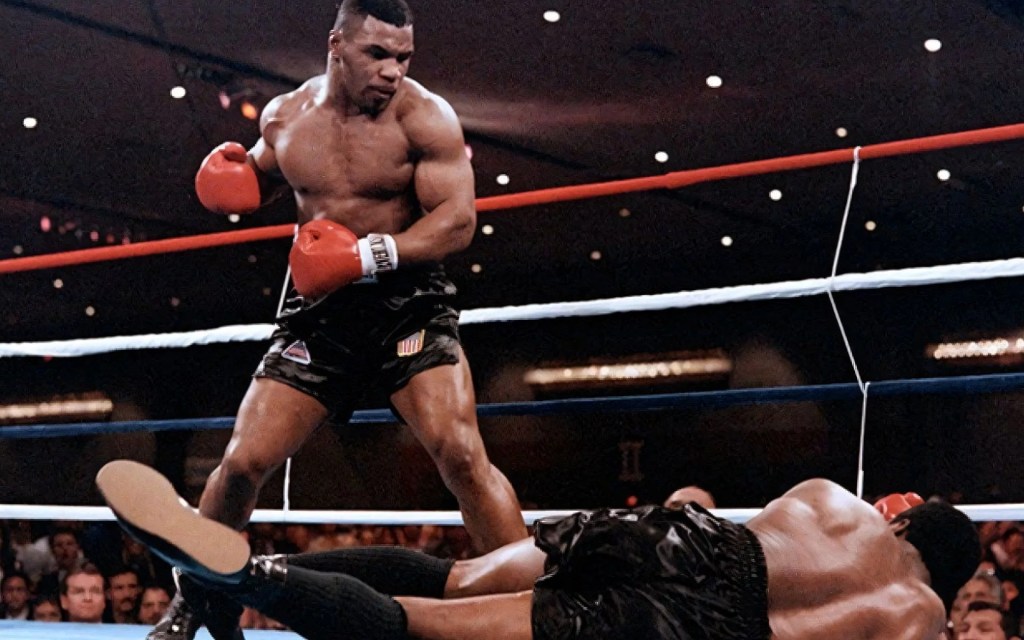
Mike Tyson remains an enigmatic figure in the world of boxing, revered for his heavyweight prowess, explosive punching power, and unmatched agility. Despite controversies and setbacks, Tyson’s impact on the sport is undeniable, with his skills and charisma captivating audiences worldwide. Many boxers, including the likes of Oscar “Golden Boy” De La Hoya, Gervonta “Tank” Davis, and Ryan “King Ry” Garcia, have praised Mike Tyson as an all-time great in the world of heavyweight boxing. In this article, we delve into the essence of Mike Tyson’s fighting style and explore the strengths and weaknesses that defined his legendary career.
Mike Tyson’s identity was characterized by the weight of a heavyweight, the speed of a middleweight, and explosive punching power. His agility, stability, and swift weight shifting were unparalleled in the heavyweight division, earning him the adoration of fans and the title of a marketable boxing superstar in the United States.
Tyson possessed remarkable elasticity, rhythm, and flexibility, bolstering his in-ring prowess with showmanship and crowd appeal. However, opinions regarding Tyson’s legacy remain contentious, with some lamenting his brief prime overshadowed by struggles with substance abuse and incarceration. Nevertheless, Tyson’s impact and star power have few parallels in the boxing world, with only a handful of successors coming close, such as Oscar De La Hoya and Floyd Mayweather.
When discussing the greatest boxers of all time, Tyson’s career invariably merits recognition, particularly his defensive skills, which were his true lethal weapon. In the realm of boxing history, powerful champions abound, but few match Tyson’s sensational presence. His exceptional speed, agility, and defensive maneuvers set him apart as a supremely agile and technical fighter, challenging the norms of the heavyweight division.
Despite his small stature for a heavyweight, Tyson’s exceptional hand speed and flexibility allowed him to unleash devastating attacks from all angles. His defensive mastery, characterized by head slips and weaving, rendered opponents unable to land clean shots, solidifying his reputation as one of boxing’s greatest defensive fighters.
In contrast to traditional heavyweight sluggers, Tyson’s style involved fluid movement, lightning-fast combinations, and unmatched reflexes, overwhelming opponents with relentless pressure. His exceptional hand speed and footwork defied the conventions of heavyweight boxing, making him a formidable force in the ring.
However, Tyson was not without weaknesses. Despite his dominance over most opponents, he struggled against opponents who employed clinching and infighting tactics. His vulnerability to these strategies, exacerbated by lapses in conditioning and focus, contributed to his downfall in pivotal matchups, highlighting areas for improvement in his game.
As Tyson aged and his prime waned, his once-dominant speed diminished, exposing vulnerabilities in his defensive capabilities. Despite his diminutive stature for a heavyweight, Tyson’s agility and speed compensated for his physical disadvantages, enabling him to outmaneuver opponents and deliver punishing combinations. However, with declining speed came increased susceptibility to opponents’ attacks, ultimately challenging Tyson’s ability to maintain his defensive prowess.
In conclusion, Mike Tyson’s legacy transcends the boundaries of boxing, embodying the epitome of athleticism, skill, and charisma. Despite his flaws and setbacks, Tyson’s impact on the sport remains indelible, forever etched in the annals of boxing history.
 StrikeSaga
Leave a comment