Introduction
Mixed martial arts (MMA) has evolved rapidly over the past few decades, and few fighters have left as indelible a mark as Khabib Nurmagomedov. Known for his relentless pressure, seamless transitions, and unyielding grappling prowess, Khabib redefined what it means to be a dominant fighter in the octagon. This post delves deep into how Khabib’s legacy has transformed grappling in MMA, influencing a generation of fighters and shaping the sport’s future.
The Rise of a Champion
Khabib’s journey from the mountainous regions of Dagestan to the global stage of the UFC is a testament to dedication and discipline. His upbringing in Dagestan, a region known for producing world-class wrestlers, laid the foundation for his fighting style. Training under the guidance of his father, Abdulmanap Nurmagomedov, Khabib developed a unique combination of Sambo, Judo, and traditional wrestling, blending them into a style that became his hallmark in the cage.
When Khabib entered the UFC, he showcased a type of grappling that audiences hadn’t seen before. His ability to chain wrestle, using one takedown attempt to transition seamlessly into another, left opponents overwhelmed and exhausted. The world witnessed this firsthand in his fights against elite athletes like Rafael dos Anjos, Edson Barboza, and, most notably, Conor McGregor.
The Unmatched Grappling Style
Khabib’s grappling wasn’t just about taking his opponent down—it was about suffocating them. His ground control, specifically the technique known as “Dagestani handcuffs,” involved trapping his opponent’s arm behind their back, rendering them defenseless while he delivered punishing strikes. This control-and-strike approach demoralized his opponents and disrupted any attempts at a counterattack.
What set Khabib apart was his methodical use of positioning. Unlike many wrestlers who prioritize quick, explosive takedowns, Khabib focused on dragging opponents into deep waters. He would use trips, sweeps, and clinch work to wear them down. His fight against Dustin Poirier at UFC 242 is an exemplary showcase of his grappling mastery—Khabib relentlessly pursued takedowns, applied continuous pressure, and secured a fight-ending rear-naked choke.
Training Philosophies and Influence on Future Fighters
Khabib’s training philosophy revolved around pushing beyond comfort zones. His infamous sparring sessions with other Dagestani fighters were known for their intensity. Khabib emphasized that mental toughness was as important as physical skill, a principle ingrained in the rigorous regimen at his training base in Makhachkala. He trained with high-level athletes like Islam Makhachev, who now carries forward Khabib’s legacy in the lightweight division.
The influence of Khabib’s grappling can be seen in a new wave of fighters who prioritize top control and positional dominance. Fighters such as Arman Tsarukyan and Movsar Evloev have incorporated similar techniques into their skill sets, demonstrating how Khabib’s approach has shifted the focus back to the roots of grappling.
Redefining the Grappling Narrative
Before Khabib’s ascent, striking-heavy approaches dominated MMA. However, his success reintroduced the significance of grappling-centric game plans. Coaches and gyms worldwide have started emphasizing the importance of chain wrestling and ground control as essential skills. The American Kickboxing Academy (AKA), where Khabib trained, saw a resurgence of interest in its programs as young fighters sought to learn from the legacy of the Eagle.
His fight against Justin Gaethje at UFC 254, where he secured a second-round submission despite Gaethje’s strong wrestling credentials, proved that Khabib’s grappling wasn’t just a one-dimensional force. It was adaptable, resilient, and meticulously planned.
Beyond the Cage: Khabib’s Impact on MMA Culture
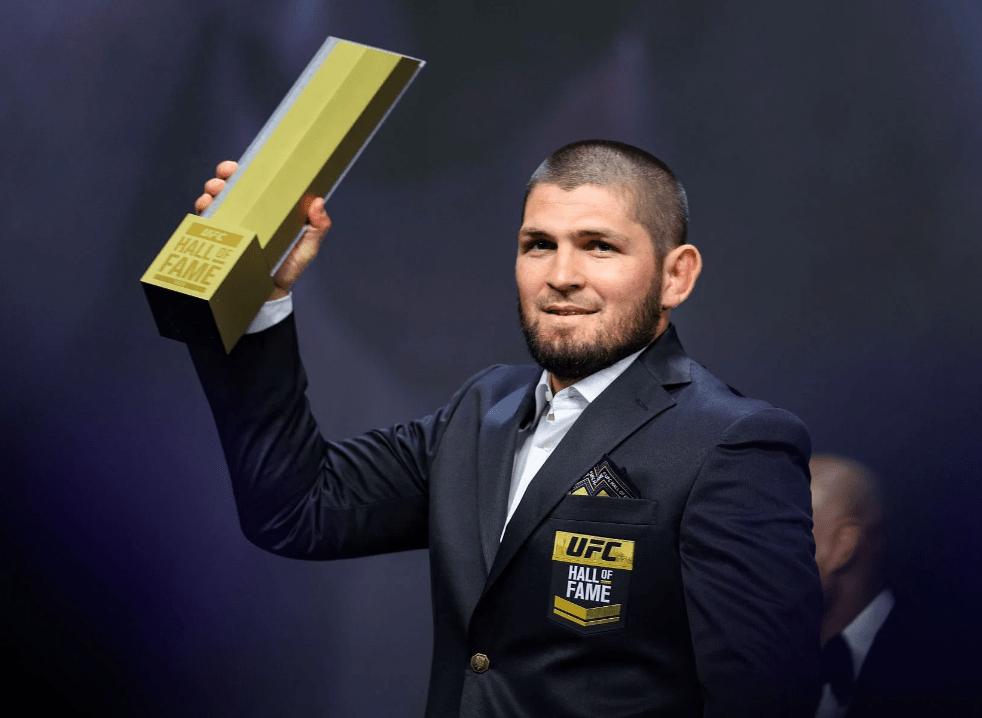
Khabib’s retirement in 2020, following his 29-0 record, marked the end of an era but solidified his position as one of the greatest grapplers and athletes in the sport’s history. His influence extends beyond his fights; Khabib’s humble demeanor, respect for his opponents, and devout faith created a cultural shift in how fighters approached competition. The MMA community saw a renewed emphasis on sportsmanship and discipline, values that Khabib embodied throughout his career.
Conclusion
Khabib Nurmagomedov’s legacy is not just defined by his undefeated record but by how he transformed the art of grappling in MMA. He set a new standard for control, pressure, and positional dominance, reshaping training philosophies and inspiring countless fighters to adopt more comprehensive grappling skills. As the sport continues to evolve, Khabib’s imprint on MMA remains as strong as ever, serving as a testament to the power of mastery, discipline, and relentless pursuit of excellence.
 StrikeSaga
Leave a comment