Introduction
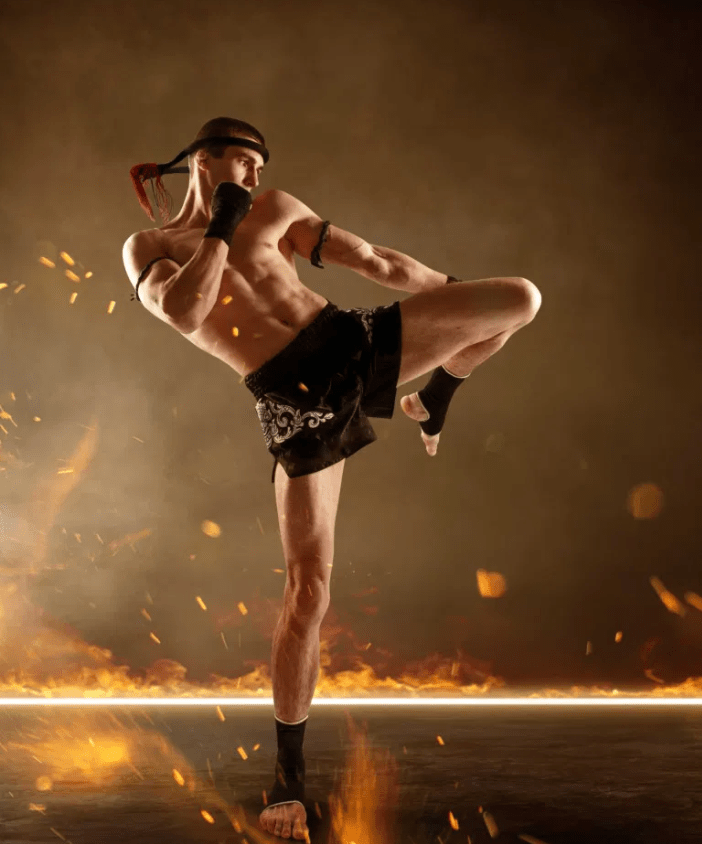
Muay Thai, known as “The Art of Eight Limbs,” has become a cornerstone discipline in the diverse world of MMA. Utilizing punches, kicks, elbows, and knees, Muay Thai fighters bring a dynamic arsenal that has proven devastating in the cage. This post explores the integration of Muay Thai into MMA, its effectiveness, and fighters who have mastered this striking art to dominate their opponents.
The Core Principles of Muay Thai
Muay Thai’s distinctiveness comes from its use of eight points of contact, enabling fighters to attack from multiple angles and distances. Unlike traditional boxing or kickboxing, Muay Thai practitioners learn to incorporate clinch work, elbows, and knee strikes, making close-range combat particularly dangerous.
In MMA, Muay Thai techniques have been adapted to suit the sport’s multidimensional nature. For example, elbow strikes, which are often overlooked in other striking disciplines, can end fights due to their ability to cut opponents. Clinch work, too, is essential, as it allows fighters to control their opponent’s posture while delivering damaging knees.
Notable Fighters and Their Muay Thai Mastery
Several MMA fighters have showcased the effectiveness of Muay Thai, merging it seamlessly into their overall skill set. Anderson Silva, the former UFC middleweight champion, demonstrated how powerful Muay Thai could be when integrated with other martial arts. His famous knockout of Rich Franklin in their first fight remains a textbook example of the Muay Thai clinch being used to dismantle an opponent.
Another standout is Joanna Jędrzejczyk, whose relentless pace and combination striking overwhelmed many of her opponents during her championship reign. Her ability to throw precise combinations with elbows and kicks showcased how Muay Thai could be devastating in MMA.
Training for Muay Thai in MMA
Training for Muay Thai in an MMA context focuses not just on traditional drills but also on adapting techniques for cage work. Fighters often practice situational drills, such as delivering elbows and knees against the cage or transitioning from the clinch to takedown defense.
Cardio conditioning plays a significant role in Muay Thai training, as it demands relentless energy output. Fighters typically engage in high-volume pad work, sparring, and heavy bag training, ensuring that their striking combinations are sharp and effective under fatigue.
Muay Thai’s Defensive Techniques and Adaptations
One of the most challenging aspects of integrating Muay Thai into MMA is adapting defensive techniques. While traditional Muay Thai fighters rely heavily on checks, counters, and blocks, MMA requires more head movement and spatial awareness to avoid takedowns.
Fighters like Jose Aldo, who initially came from a Muay Thai background, adapted these techniques to improve his takedown defense and striking capabilities. His leg kicks, derived from Muay Thai, became legendary for their effectiveness, even neutralizing some of the best wrestlers in the sport.
Conclusion
Muay Thai’s presence in MMA is undeniable, providing fighters with a versatile striking approach that can turn the tide of any fight. From clinch battles to knockout strikes, the Art of Eight Limbs remains a powerful tool in a fighter’s arsenal. As MMA evolves, Muay Thai continues to be refined and adapted, ensuring its legacy within the sport for generations to come.
 StrikeSaga
Leave a comment